Tianjin Haitang Building Facade Pixel Lighting | Custom DMX512 LED for Parametric Curtain Wall
Project Overview
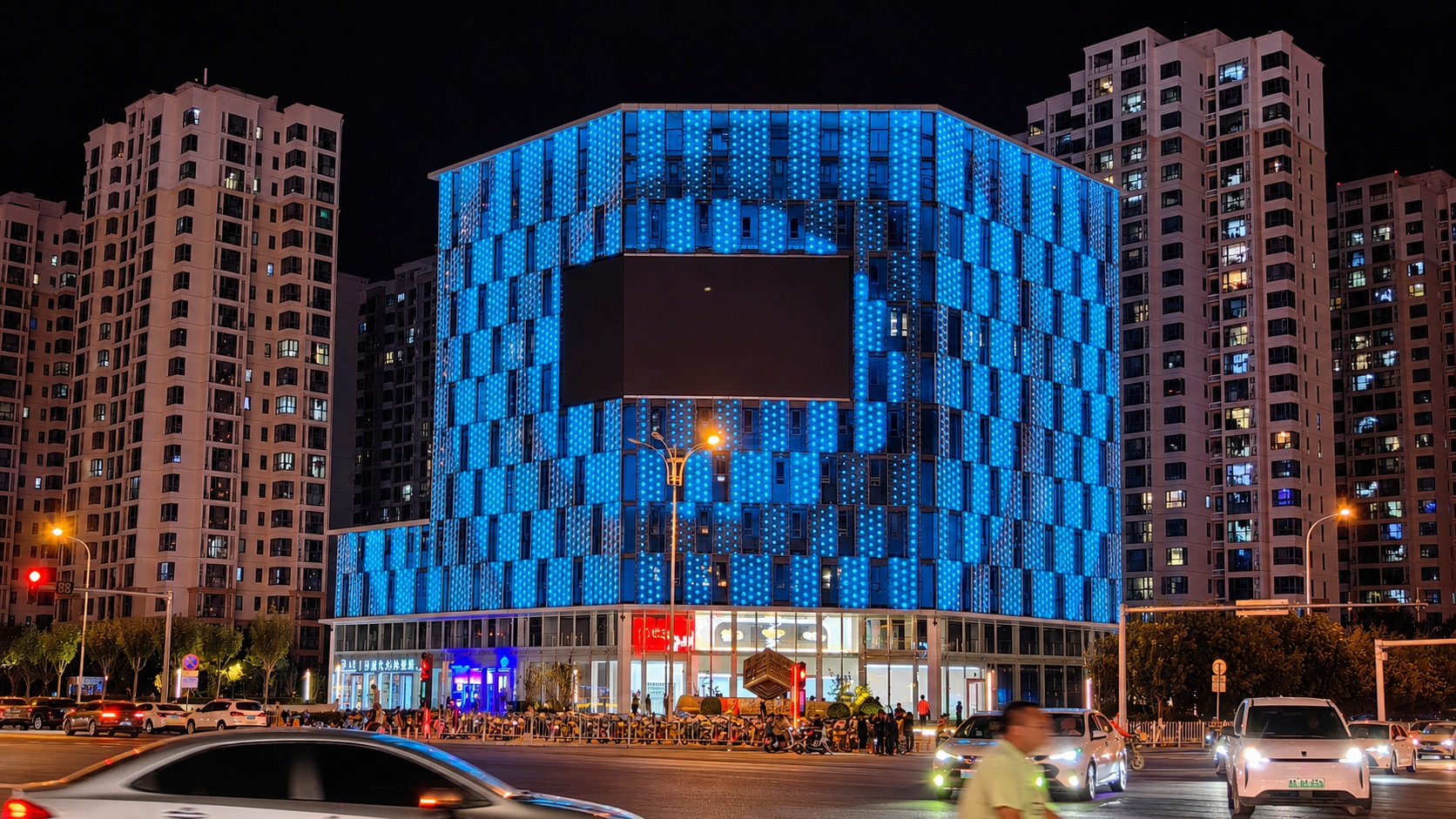
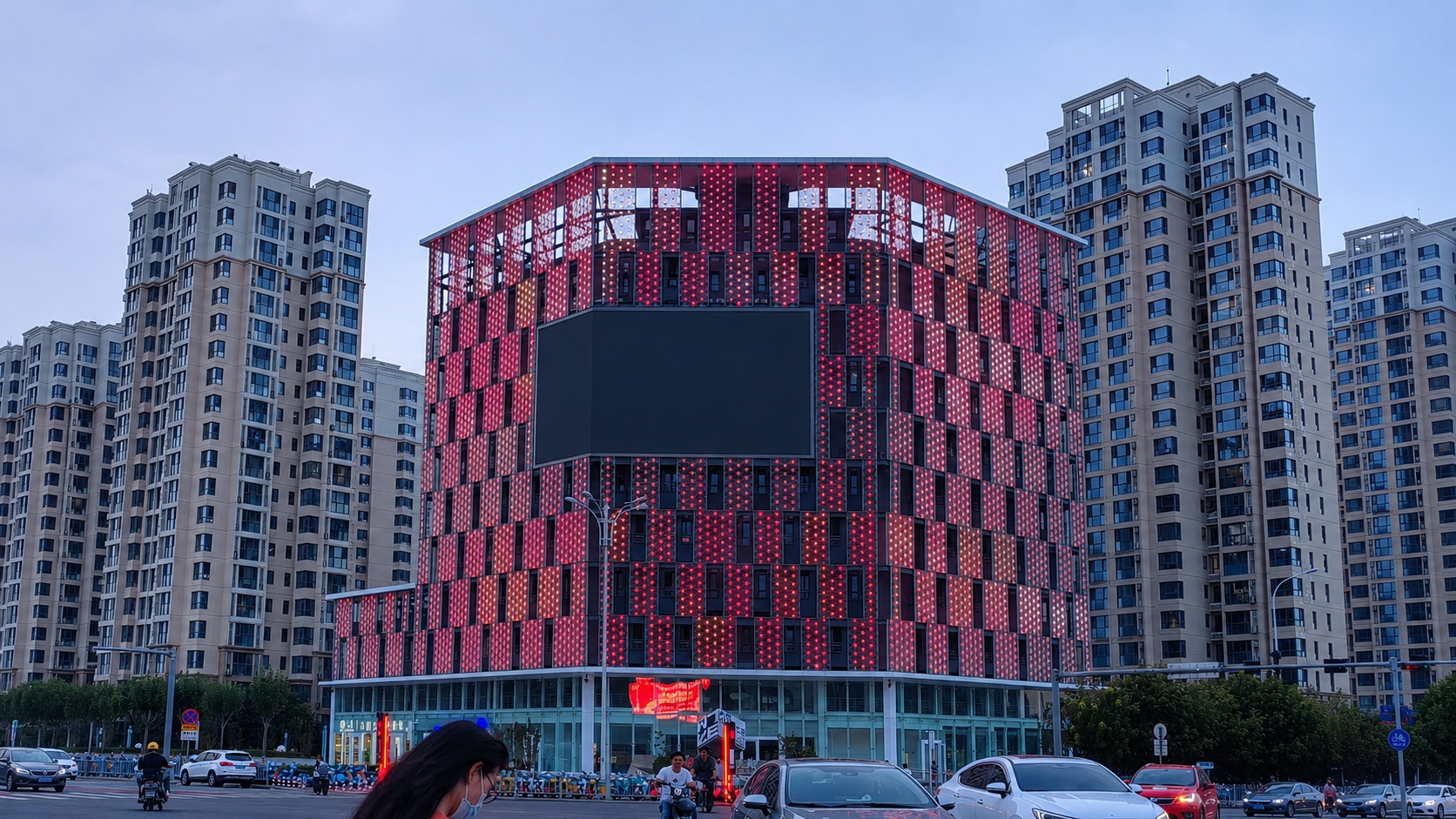
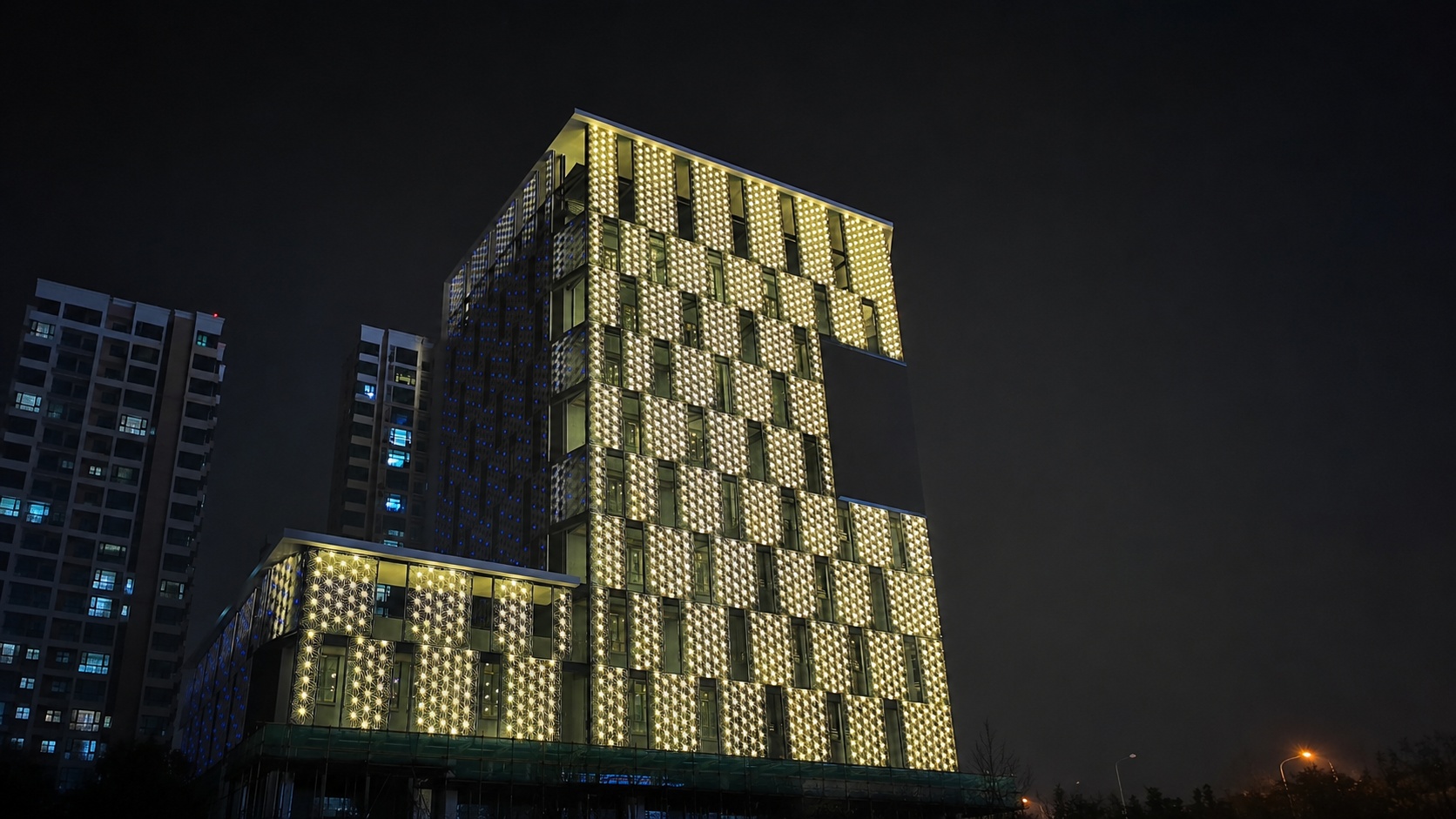
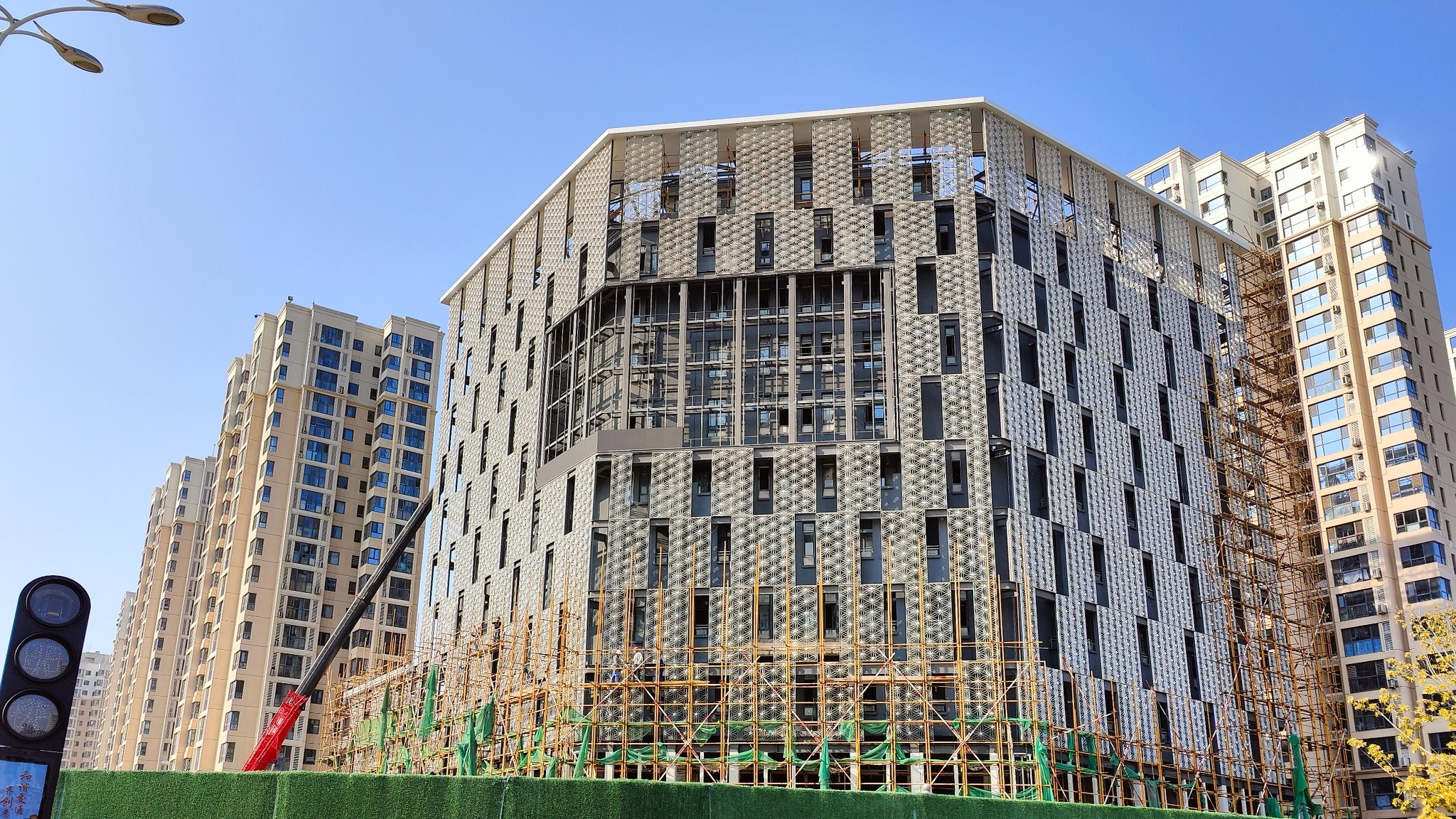
The Tianjin Tencent Haitang Zhongchuang Street G District building is an 11-storey commercial office property at the intersection of Jinnan Avenue and 28th Road in Tianjin’s Jinnan District, with an exterior facade area of approximately 8,000 m². Its curtain wall surface is covered in parametric aluminium screen panels derived from the Begonia flower form, in which every structural node is simultaneously a fixture mounting position — a design condition that made any off-the-shelf luminaire specification impossible from the outset.
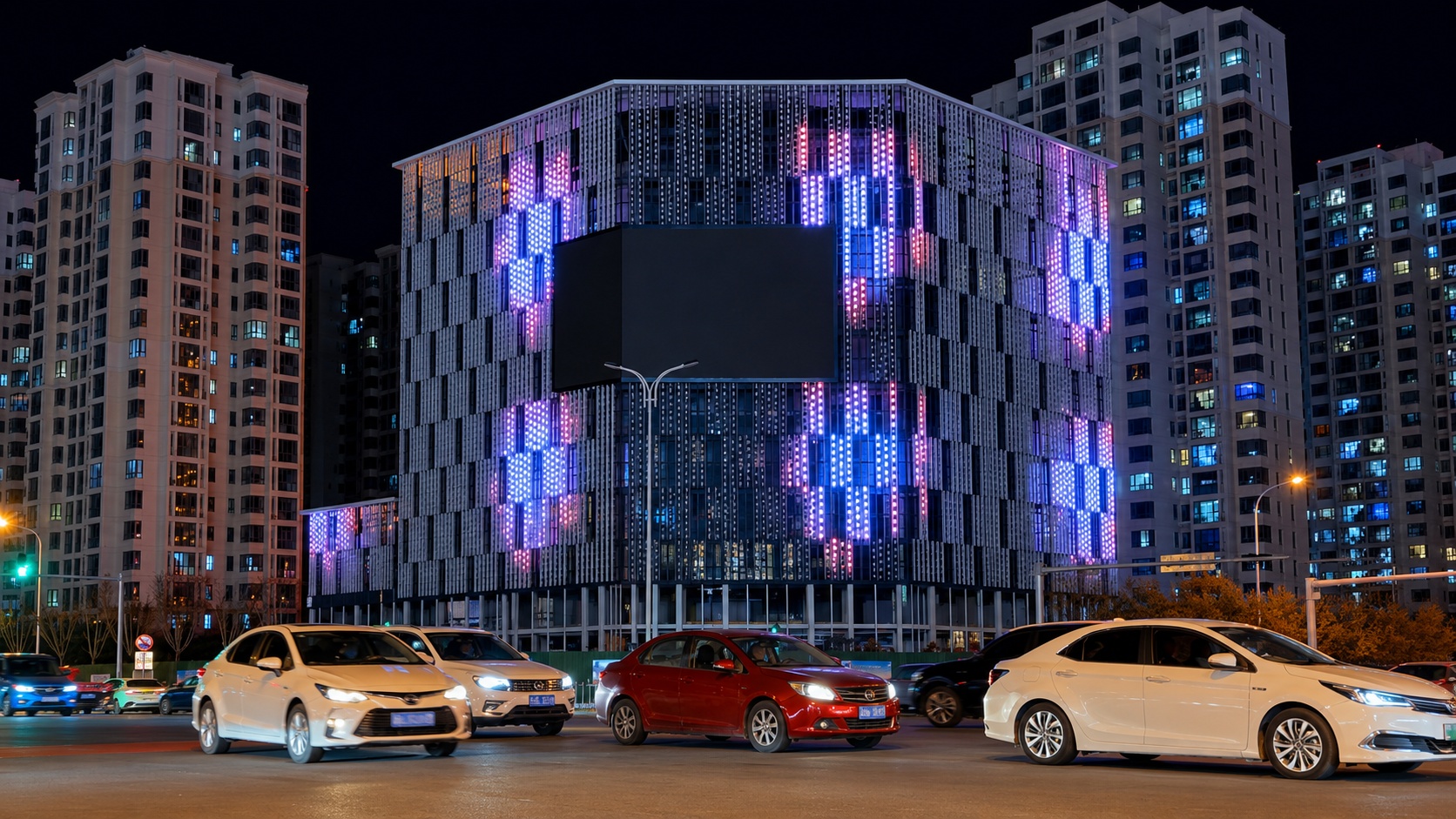
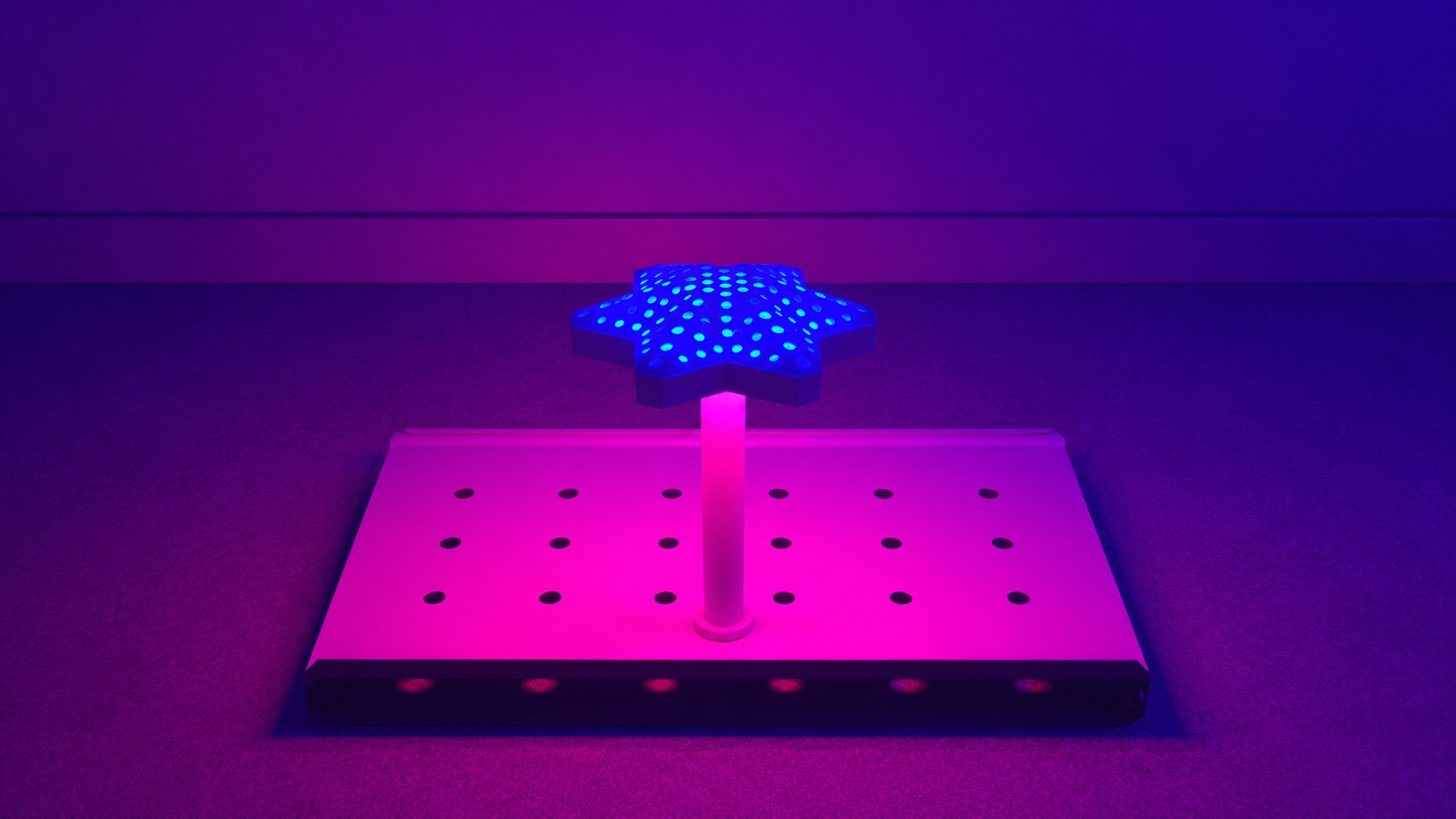
When TPK Lighting received the project brief, the LPM-MJ-HEX130-DMX did not exist. Working from the lead designer’s hand-sketched concept, TPK coordinated with structural engineers, tooling manufacturers and the lighting design team through a full development sequence: geometry prototyping, lens aperture iteration, weight testing, thermal simulation and aging validation. The result is a six-pointed star pixel fixture whose face geometry matches the curtain wall node exactly. A total of 4,495 units were installed across the building — each rated at 3W (front face) + 9W (back face), 12W combined, RGBW, DC 24V, DMX512 individually addressed. Twelve MADRIX LUNA 16 controllers running Madrix AURA manage the entire installation, with a pre-configured signal interface for synchronisation with the building’s rooftop 3D LED screen. The building lit for the first time on 30 March 2023.
This project is a reference case for “facade as media” installations — where the fixture shape is dictated by the building geometry, the mounting method is determined by the curtain wall node, and the control logic is integrated with the building’s visual media system. It documents TPK’s end-to-end capability across custom form development, weight and thermal engineering constraints, and large-scale DMX pixel system integration.
Key Challenges & TPK Solutions
When the Fixture Has to Match the Building Node — The Engineering Problem
No Off-the-Shelf Product Exists — Shape Is Non-Negotiable
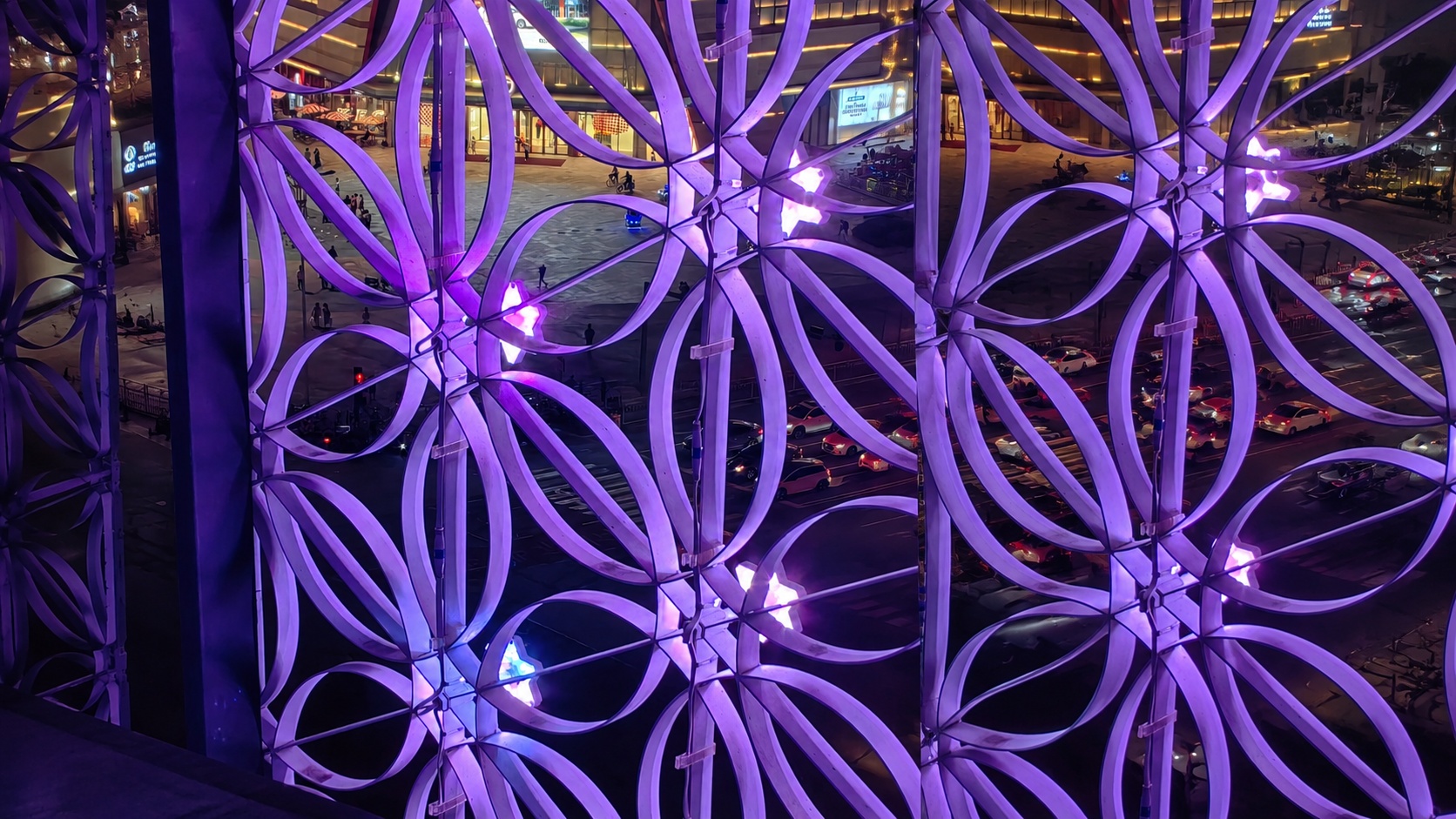
The aluminium curtain wall screen uses six-pointed star intersections as its structural nodes. Any fixture mounted at these nodes must protrude centrally from the node and match its face geometry precisely. No commercial pixel luminaire exists in this form. Selecting a round or square fixture as a compromise would disrupt the curtain wall’s daytime visual consistency and fail the design intent: the fixture must function as a building component by day and a pixel unit by night.
From Sketch to Production: Developing the LPM-MJ-HEX130-DMX
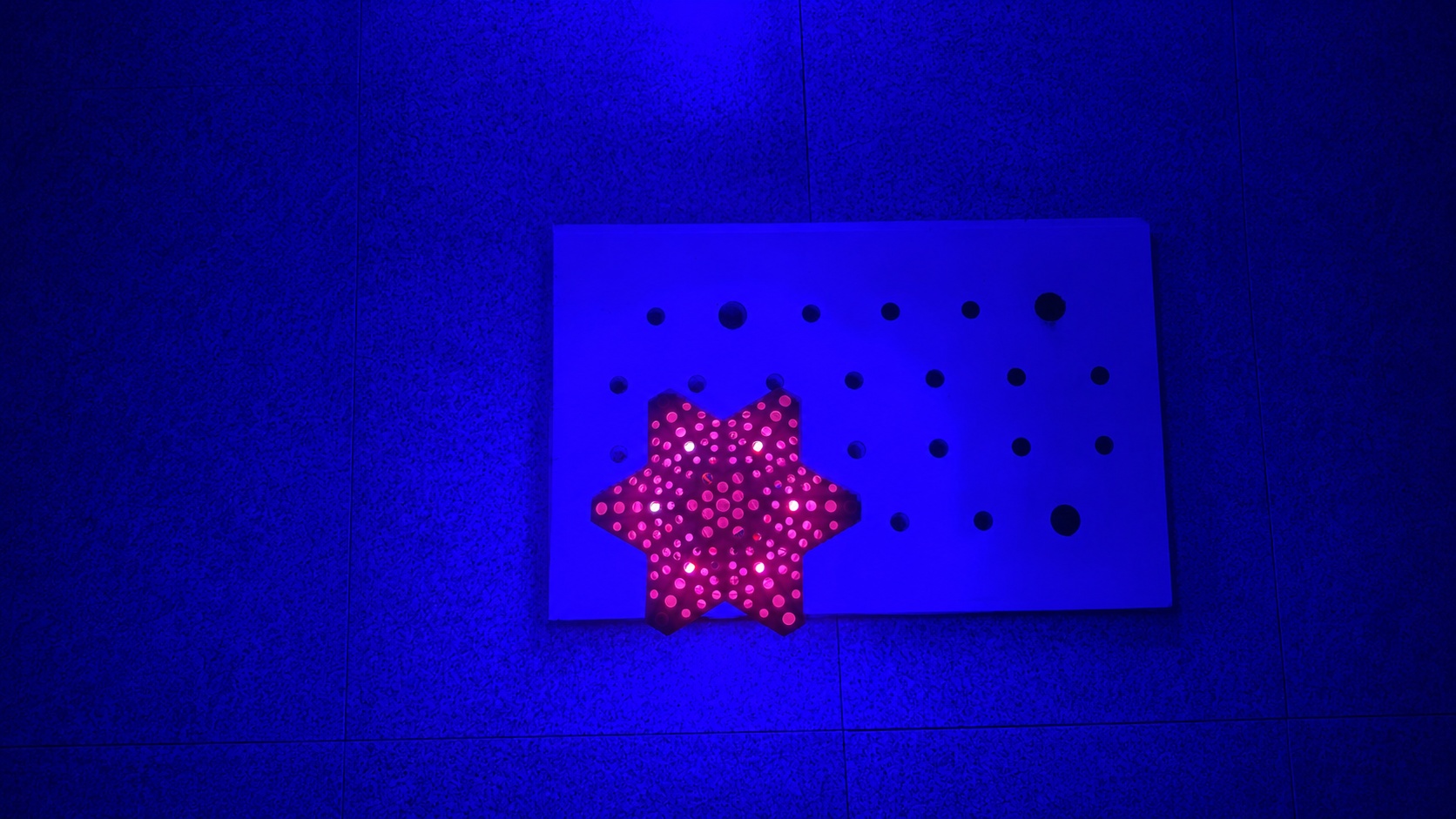
Starting from the designer’s hand-drawn concept, TPK coordinated the tooling manufacturer through a two-part structural approach: an aluminium alloy heat-sink body with a PC injection-moulded star-face cover. The cover geometry matches the curtain wall node exactly. The mounting system uses a bolt-through stud passing through the node, locked with a nut from the curtain wall reverse face — the fixture body is fixed first, then the stem is rotated to tighten, preventing cable wrap during installation.
Node Load Capacity — 4,495 Mounting Points Aggregate Into a Structural Engineering Problem
The aluminium screen node has a defined structural load limit. The initial specification with an aluminium body and metal stem assembly measured 404.2g per unit. A PC cover with straight tube assembly reduced this to 373.6g. Across 4,495 mounting points, the cumulative load difference exceeds 135 kg — a structurally significant differential that cannot be approximated away.
Two Variants Weighed and Submitted for Structural Calculation
TPK physically weighed both configurations — PC cover straight-tube version (373.6g) and metal version (404.2g) — and submitted precise data for the structural engineer’s curtain wall load calculation. The approved variant was locked for production only after structural confirmation. Weight records were filed in project documentation as a baseline for future maintenance replacements.
Lens Aperture Affects Daytime Facade Appearance — LED Sources Visible at Oblique Angles
The first prototype cover used aperture holes that were dimensionally too large. At certain oblique viewing angles, the LED sources were clearly visible, interrupting the uniform pattern texture of the curtain wall. The aluminium screen should present as a consistent geometric surface by day. The lighting designer’s prototype review verdict: “The holes need to be smaller.”
Large Apertures Reduced 1mm / Small Apertures Reduced 0.5mm — Confirmed After Iteration
TPK revised the tooling: large aperture diameters reduced by 1mm, small apertures by 0.5mm, quantities and positions unchanged. The objective: eliminate LED source visibility at oblique angles without reducing night-time output. The revised prototype was submitted for review and confirmed: “This light point is acceptable — it’s already within tolerable range.” Tooling was locked and production commenced.
Thermal Management in a Dense Installation — Junction Temperature Is the Long-Term Reliability Risk
4,495 pixel fixtures installed densely within the curtain wall structure face restricted natural convection paths. Elevated LED junction temperatures accelerate lumen depreciation and shorten operational life. The project required thermal validation before production commitment — “install and observe” was not an acceptable approach for a permanent installation at this scale.
Thermal Simulation + Aging Test — Peak 63.7°C, Both Reports Filed Pre-Production
TPK completed a thermal flow simulation showing a peak body temperature of 63.7°C with uniform temperature gradient across the LED zone and significantly lower temperatures at the mounting stem — confirming the stem functions as an effective conduction path. A concurrent aging test report validated temperature stability under sustained full-load operation. Both documents were filed as production qualification records before any unit shipped.
Core Focus
When the Building Facade Is the Media Screen
The Haitang Building specification differs fundamentally from conventional facade illumination: there is no step of “placing fixtures on the building surface.” The fixtures are the building surface. From the design stage, the curtain wall node is the mounting position and the fixture face is the pattern unit. This precondition places demands on product development, installation engineering and control system integration that exceed standard project scope.
Illuminance measurements under controlled laboratory conditions confirmed the specification basis: the 9W lens variant (frosted lens) measured 4,506 lx; the 12W variant (opal lens) measured 6,567 lx at identical fixture geometry and test distance. The final specification — 3W front face + 9W back face, 12W combined — was selected to balance pixel definition on the facade face with uniform back-illumination of the aluminium screen.
- Six-pointed star custom geometry, 4,495 units produced — LPM-MJ-HEX130-DMX developed from zero; face geometry determined by curtain wall node dimensions; functions as an architectural component by day and a pixel display unit by night, uniform specification across all 4,495 units.
- RGBW DMX512 individual addressing + 12 Madrix controllers — each fixture independently addressed; 12 MADRIX LUNA 16 controllers running Madrix AURA drive the full installation; pre-configured signal interface for synchronisation with the rooftop 3D LED screen.
- Weight and thermal engineering validated pre-production — two weight variants physically measured (373.6g / 404.2g); thermal simulation peak 63.7°C; aging test report filed; all three validation records complete before production commitment.
- Lens aperture iterated to specification — large apertures reduced 1mm, small apertures reduced 0.5mm; daytime source visibility eliminated while maintaining night-time output; confirmed by lighting designer on physical prototype before tooling was locked.
What the System Delivers
4,495
Pixel Fixtures Installed
8,000 m²
Facade Coverage
63.7°C
Thermal Simulation Peak
The Haitang Building is a complete engineering record for the “fixture as building component” project category. Every specification decision in this development sequence — geometry matched to curtain wall node, two weight variants physically measured, lens aperture iterated on prototype, thermal simulation and aging test conducted before production commitment — is documented and reproducible. For projects requiring luminaires integrated into non-standard building skins, or where fixture geometry must conform to an architectural pattern system, this case provides a reference methodology from product development through system integration.